जलवायु परिवर्तन अनुकूलन परियोजना

कृषि पर निर्भर ग्रामीण समुदायों की सतत आजीविका राष्ट्रीय जलवायु परिवर्तन कोष (NAFCC) के अंतर्गत

पर्यावरण, विज्ञान, प्रौद्योगिकी और जलवायु परिवर्तन विभाग हिमाचल प्रदेश सरकार

Farmer Producer Organisation Network

Strengthening farmer livelihoods by building networks of Farmer Producer Organisations (FPOs).

The establishment of Farmer Producer Organizations (FPOs) plays a significant role in climate change adaptation programmes by fostering collective action and strengthening the resilience of small and marginal farmers against climate risks. FPOs enable farmers to pool resources and build economies of scale, which facilitate the adoption of climate-smart agricultural practices, diversification into more resilient crop varieties, and integrated resource management at the community level. By organizing farmers, FPOs help secure better access to inputs, infrastructure, and financial safety nets such as insurance, while encouraging participatory irrigation management and sustainable water use through Water User Associations and similar mechanisms. As part of climate adaptation pathways, FPOs promote timely investments in grain storage, irrigation infrastructure, and mechanized solutions, enhance access to markets for climate-resilient produce, and support tailored interventions based on local vulnerabilities such as drought or heavy rainfall. Overall, the coordinated efforts through FPOs facilitate knowledge sharing, foster adoption of adaptive technologies, and empower farming communities to better manage climate risks, contributing to both improved livelihoods and ecological sustainability. Agriculture is the mainstay of economy in the district and about 80% of the population is mainly dependent on the agriculture. Sirmaur district has about 85% small and marginal farmer families and the holdings are very small and scattered. The yield of crops is below the norm. Major food crops are grouped in three categories namely cereals, pulses and other food crops like chillies, ginger, sugarcane and turmeric. Non-food crops are of two kinds viz. oil seeds and other crops such as cotton, tobacco etc.

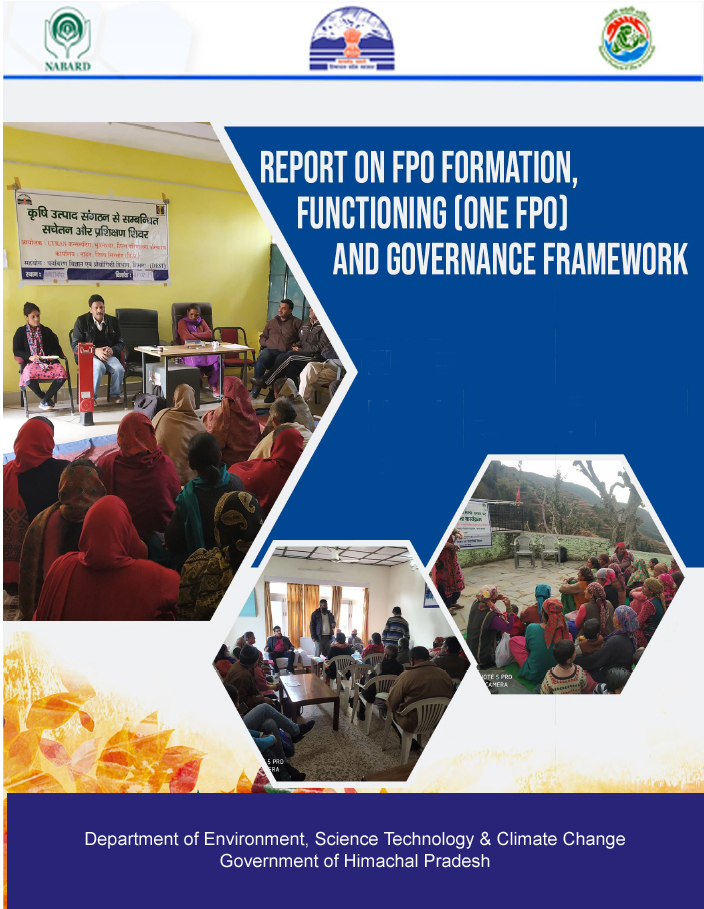
The objective of the formation of Farmer Producer Organization is to have organic links with the community institution architecture of Self Help Groups and federations and focus more on creating value chains for small and marginal farmers and producers by enabling direct market linkages. At least three FPOs will be formulated and activation of one FPO is the main target of the project. At the village level, Producer Groups are being formed by mobilising anywhere between 20–100 small farmers depending upon the commodity in focus. These Producer Groups serve as effective platforms for collective orientation and capacity building of producers while facilitating backward linkages through parent producer companies. The small farmers are oriented on benefits of aggregation and quality control. Production planning is being undertaken at the start of every season to aggregate demand for inputs as well as to ensure potential procurement volume. Village level Producer Groups are being equipped with requisite basic infrastructure and quality control tools to serve as primary aggregation hubs. Village level Producer Groups serve as the interface between Producer Groups and the FPCs and deliver services like training, weighing, quality assessment and daily price communication.


 

FPO FORMATION PROCESS

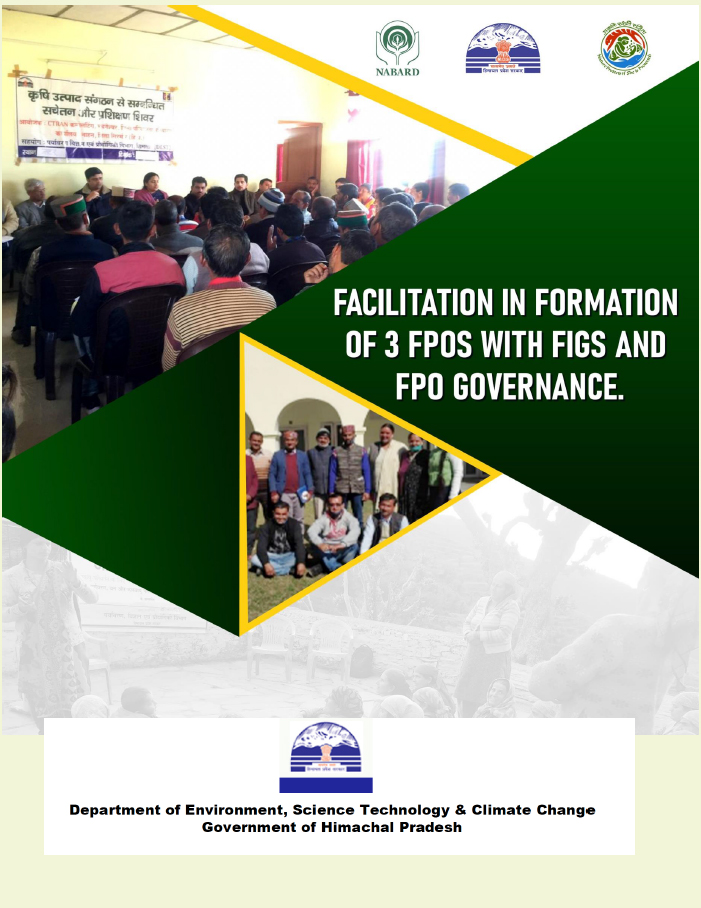
As a first step to Institution Building, efforts were made to form FIGs in each Block. It was started with the identification of farmers interested to be part of this project who subsequently mobilized as member of FPOs. The FIGs formations were made with involvement of local PRI members and line department officials, rapport building and community mobilization, identification of farmers and final formation of FIGs to link them with Farmer Producer organizations. After formation of FIGs, the facilitation process for formation of FPOs was undertaken in all the three Blocks. The clusterization of FIGs in each block is given in the matrix below:


FPOs Registered

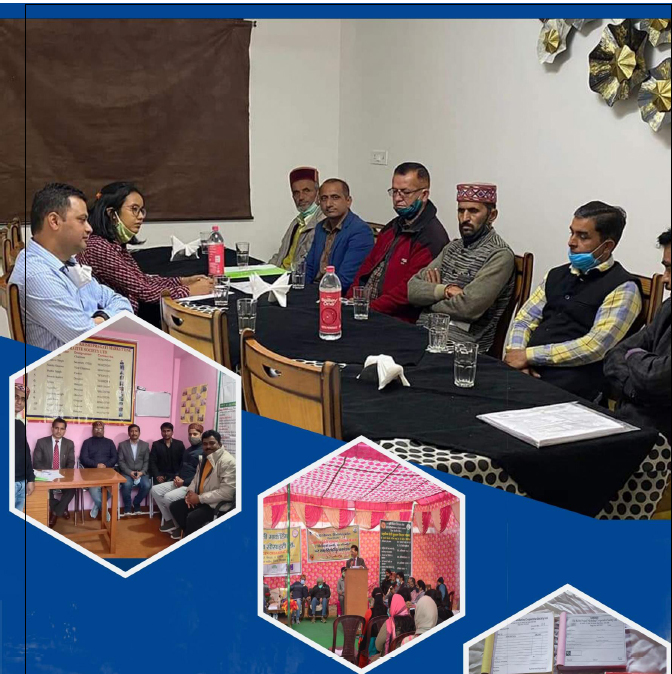
Prior to registration in each block a draft bye-law was prepared and shared with the concerned selected BoD members. As per the suggestions of BoD members the Bye-laws were finalized and the FPO registration process was initiated. For the purpose related documents like the photographs of BoD members, their Aadhar card and address detail, FPO meeting resolution for getting the FPO registered and opening of bank account in the name of FPO and share money collection and depositing the share money in FPO bank accounts etc. were done. The applications of FPOs were submitted to the Department of Cooperative, Government of Himachal Pradesh for registration. As per the mandate all the three FPOs one in each Block was registered under HP Cooperative Society Act 1968(Act No.3 of 1969). The registration details of FPOs are mentioned below. In the meetings the names of FPOs were also finalized by the concerned BoD members for registration.

Lead Farmers Training at Pachhad

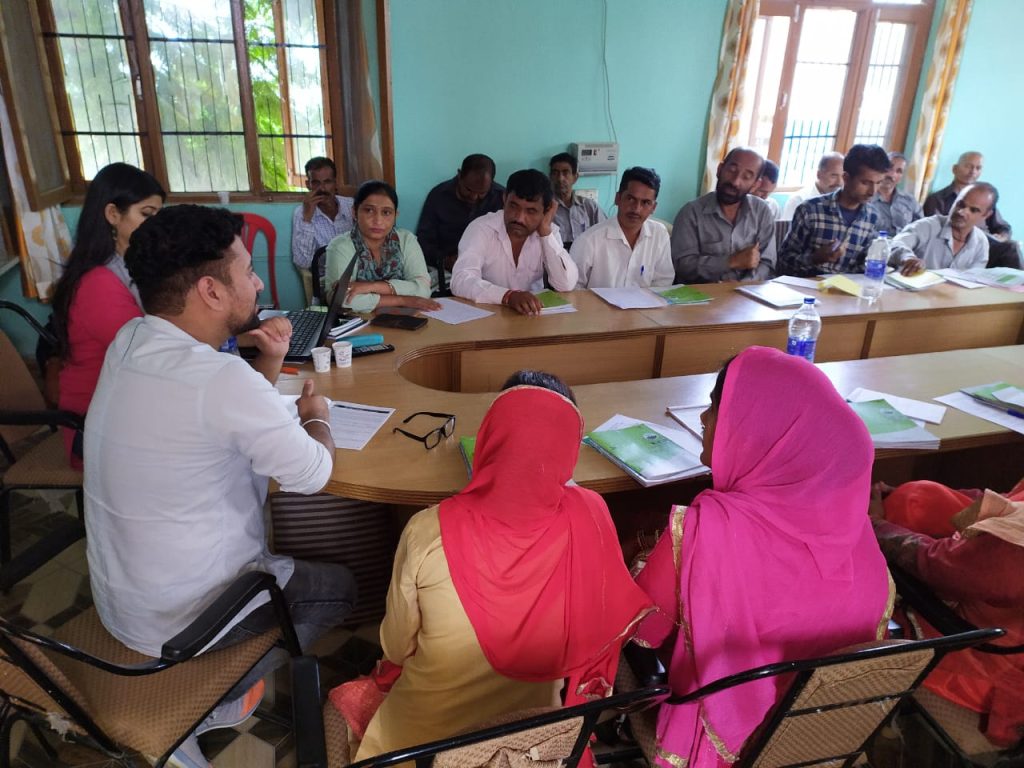
In order to undertake Business activities by FPO and preparation of business pan a two days training program for FPO BoD members were organized in the premises of Kaffota guest house. In this training programs nearly 52 participants from different FIGs and executive BoD members had participated and imparted inputs on business ideas generation, collection of information, human resource and financial planning, marketing strategy and its implementation etc. were discussed. The sessions were facilitated through group work and lecture method by the internal resource persons of CTRAN Consulting. Ultimately it was discussed that the FPO will do business activities relating to marketing of maize and wheat flour packets of different weights and sizes. According the information were collected and Business plan was prepared.

The total area under Maize and Wheat cultivation in Paonta Sahib Block is estimated at 17502 and 16703 ha respectively. The average area under Maize and Wheat cultivation is around 0.6 and 0.4 Ha respectively by individual members of the FPC. Total area under Maize and Wheat cultivation by all members is 120 & 80 Ha respectively. Local vvarieties of Maize and Wheat grown in the area with an average yield of 1600Kg per acre and 1400 kg per acre respectively. The total production of Maize by the members is around 4800 Qtl and that of Wheat is 2800 Qtl. Maize and Wheat are being grown in large area in the block as well as in project villages. These are being sold locally by the traders. Most the farmers do Maize and Wheat milling for their own consumption. The average price received by farmers for Maize is Rs 30 and for Wheat is 32 per Kg in local markets. Maize and Wheat flour have better marketing opportunity as they are being grown organically. The people in the project block usually takes Roti made up of Maize and Wheat. The production of Maize and Wheat flour from Maize and Wheat can fetch more prices. The price of Maize flour and Wheat flour Rs.45 and Rs.52 respectively.

The total project cost is 4 Lakhs. The Flour machine will be used on rent basis operated by perennial water flow so no electricity will be consumed. The FPC will use the existing water operated plant to make Maize and Wheat flour. FPC will take a warehouse on rent basis nearby to package the flour into 1 kg, 2 kg and 5kg packets.

The FPC would expect revenue of 8.02 Lakhs in the first year which would gradually increase to 9.35 lakhs in 3rd year. The gross profit of the company in the first year will be 2.58 lakhs which will gradually rise to 3.02 lakhs in third Year. The net profit in the first year will be 1.28 lakhs and in the third year it will be around 1.63 lakhs. The IRR for the project will be 37.98 %, net project value will be 2.85 lakhs, breakeven point is 42.67%, the benefit cost ratio will be 1.47. Overall, the project is financially viable and the FPO members agreed to take up the business activities.